
Hiring licensed, insured, and bonded contractors is essential because it shields homeowners from devastating financial liability, ensures adherence to state building codes, and provides legal recourse if a project is abandoned or completed defectively. A valid license proves trade competence and regulatory clearance, comprehensive insurance covers accidental property destruction and jobsite worker injuries, and a surety bond acts as a financial guarantee that reimburses the property owner if contractual obligations fail to be fulfilled. Without these three protections, a homeowner absorbs total financial and legal responsibility for jobsite accidents, substandard building practices, and unfinished work.
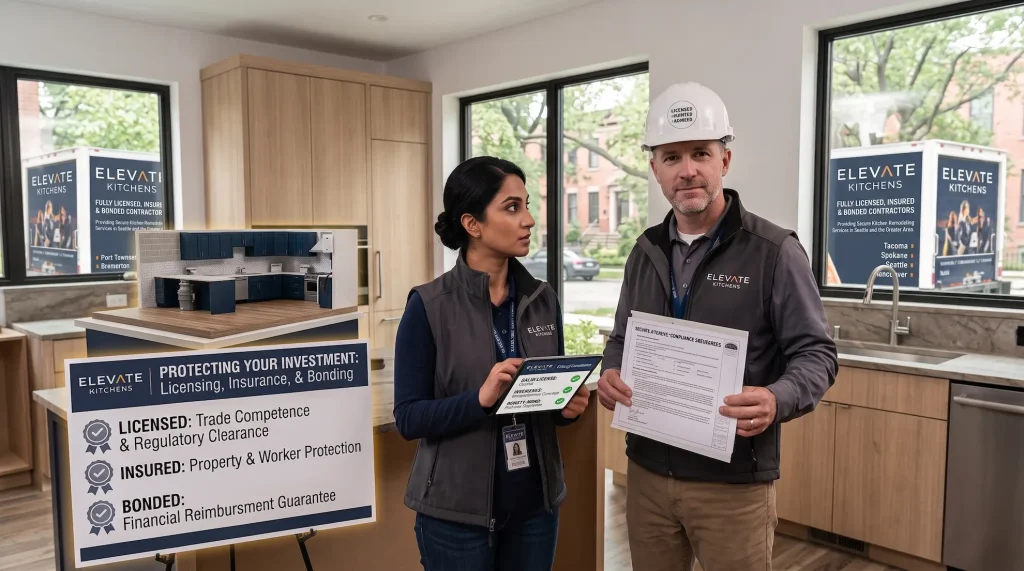
Commencing a residential renovation involves significant capital, complex logistical scheduling, and opening your private living space to trade crews. Whether you are reconfiguring structural floor plans, upgrading electrical breaker panels, or undertaking an extensive kitchen renovation, the credentials carried by your construction professional matter far more than the lowest price tag on an estimate sheet.
Cutting corners by hiring unverified labor presents hidden dangers that routinely turn budget friendly remodeling dreams into costly legal nightmares.
The Protection Framework: Differentiating the Three Core Credentials
Homeowners frequently hear the phrase licensed, insured, and bonded as a single catchphrase, assuming one qualification automatically provides the others. In reality, each credential functions as a distinct layer of professional verification, regulatory oversight, and financial protection.
The State License: Verified Competence and Code Adherence
A contractor license is far more than a decorative business document issued by a local municipality. Securing a state level general contracting license demands verifiable trade experience, passing exhaustive technical examinations, and demonstrating comprehensive knowledge of international residential building codes.
Legal Permitting and Municipal Inspections
Unlicensed contractors cannot legally pull structural, plumbing, mechanical, or electrical permits from local city building departments. Unlicensed crews frequently attempt to persuade clients to pull homeowner permits under their own personal names.
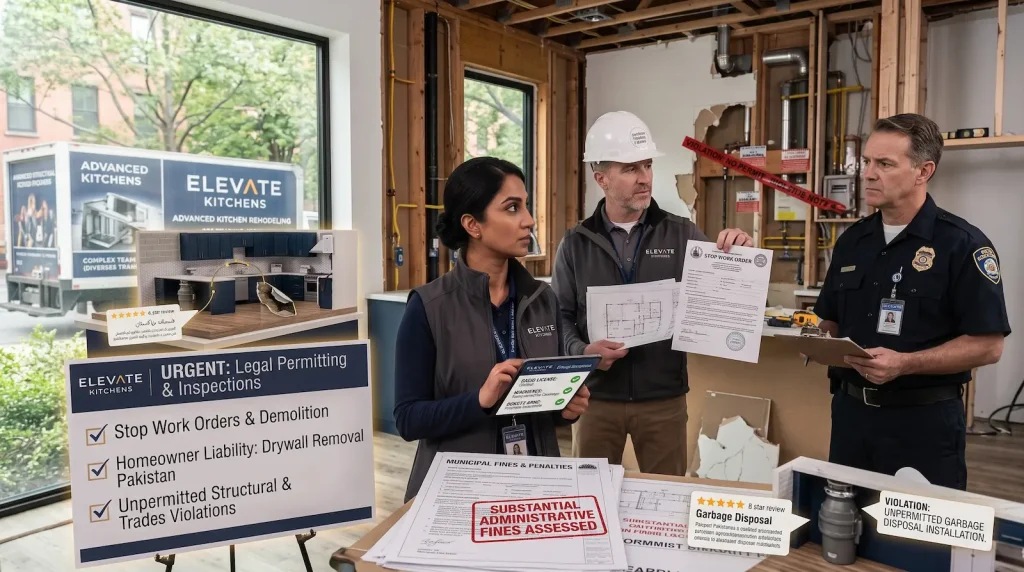
Doing so shifts full legal and structural responsibility onto your shoulders. When municipal building inspectors discover unpermitted structural framing alterations, they issue immediate stop work orders, demand invasive drywall removal to inspect hidden trades, and assess substantial administrative fines.
Future Property Resale Implications
Unpermitted and unlicensed construction creates severe title defects when listing your residence on the real estate market. Savvy buyer home inspectors immediately flag unpermitted room additions or uncertified electrical service upgrades.
Lenders frequently refuse mortgage underwriting for unpermitted square footage, forcing sellers to complete retroactive permitting at exorbitant expense or discount their property valuation drastically to secure cash buyers.
Comprehensive Insurance: Shielding Your Personal Assets
A builder can exhibit impeccable craftsmanship while still experiencing an unexpected catastrophic failure on site. Construction inherently involves high voltage wiring, pressurized water supply lines, open flame soldering torches, and heavy load transfers. Adequate insurance coverage guarantees you do not pay for unforeseen jobsite catastrophes.
Commercial General Liability Coverage
General liability protects your physical dwelling and adjacent neighboring properties. Consider a scenario where an installer drives a drywall screw through a concealed central copper supply pipe:
- If the company maintains active liability insurance, their insurance carrier manages the claim, covers emergency structural drying crews, replaces flooded hardwood flooring, and rebuilds damaged lower level ceilings.
- If the contractor operates without active liability policies, your personal homeowner insurance carrier may flatly reject coverage upon learning you hired an unauthorized, unlicensed trade operator. You are left funding tens of thousands of dollars in emergency restoration bills out of your personal retirement savings.
Workers’ Compensation Protection
Construction remains one of the most hazardous industries in the modern economy. Heavy materials, scaffolding, motorized table saws, and slippery surfaces present constant injury dangers.
If a tradesperson slips from a step ladder or cuts a hand on your premises, workers’ compensation covers their emergency medical treatments, ongoing therapeutic care, and lost wages.
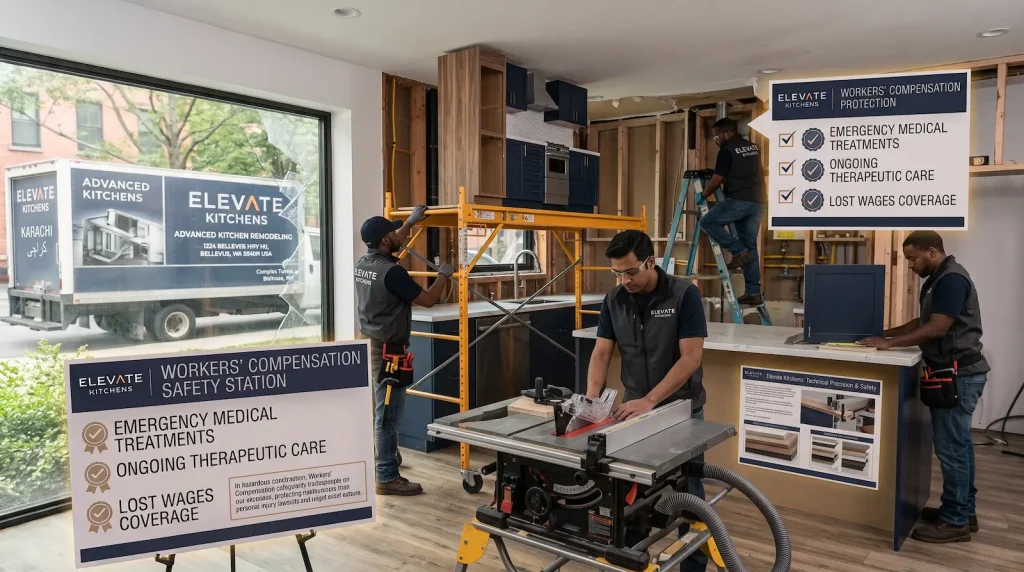
In the absence of workers’ compensation coverage, an injured laborer has full legal standing to retain a personal injury attorney and sue you directly as the property owner. Your primary residence, personal bank accounts, and future earnings become targets in a premises liability lawsuit.
The Surety Bond: Your Financial Recourse for Incomplete Work
While insurance protects against physical destruction and physical injuries, a surety bond provides a financial backstop against contractual failure, job abandonment, and unethical fiscal practices.
A surety bond represents a formal tripartite legal agreement between three distinct entities:
- The Principal: The general contractor who purchases the bond.
- The Obligee: The homeowner or municipal jurisdiction requiring the financial protection.
- The Surety Company: The regulated financial institution underwriting the bond guarantee.
Protection Against Unfinished Projects
Should a builder accept an upfront deposit, execute rough demolition, and suddenly abandon the jobsite to disappear, a bonded contract provides an established avenue for restitution. You file a direct claim against the surety company, which conducts an independent inquiry and reimburses your financial losses up to the full bond limit, allowing you to hire a reputable replacement firm.
Prevention of Costly Mechanic’s Liens
A general contractor routinely hires secondary subcontractors for specialized tasks like quartz fabrication, hardwood finishing, and ceramic tile setting. They also order extensive materials on credit from local commercial building supply warehouses.
If you pay your primary contractor on schedule, but that contractor fails to disburse payments to their subcontractors or lumber suppliers, those third parties possess the statutory right to file a mechanic’s lien against your property deed.
A mechanic’s lien clouds your home title, prevents property refinancing, and can theoretically trigger forced property foreclosure. A surety bond guarantees funds are accessible to satisfy these unpaid bills, forcing the surety underwriter to pursue the contractor rather than allowing suppliers to target your home.
How to Verify Contractor Credentials Step by Step
Never rely on verbal assurances or generic logos printed on sales business cards. Disreputable operators frequently display licensed and insured on service vehicles while operating under expired credentials.
Follow this systematic verification method prior to signing contracts:
- Query the State Licensing Board: Visit your official state contractor licensing database and look up the company by legal business name and personal owner name. Confirm their license status remains active, check for disciplinary citations, and verify their classification allows major residential remodeling.
- Demand a Direct Certificate of Insurance: Instruct the contractor’s insurance broker to email a formal Certificate of Insurance directly to your personal email inbox. The document must identify you as the certificate holder, showcase current policy effective dates, and prove coverage limits of at least one million dollars in general liability alongside statutory workers’ compensation.
- Confirm Active Surety Bond Filings: Verify the active bond carrier, the full bond identification number, and the total bonded limit with the issuing surety agency or state registrar.
Demanding verified proof of licensing, comprehensive insurance, and surety bonding establishes a relationship rooted in professional accountability. It eliminates dishonest operators, insulates your financial assets from unneeded exposure, and guarantees your home remodeling venture remains a safe, legally compliant, and rewarding physical transformation. Protect your investment before the first wall comes down—schedule your consultation with Elevate Kitchens today to partner with fully licensed, insured, and bonded renovation experts..