
A kitchen remodeling contract is a legally binding agreement between a homeowner and a general contractor that defines the full scope of work, total project costs, payment schedules, material specifications, and anticipated completion dates. An initial proposal outlines projected project estimates and conceptual designs, but signing the finalized contract protects your investment by locking in structural responsibilities, manufacturer warranties, dispute resolution terms, and lien waivers. Thoroughly reviewing these documents before work begins prevents cost overruns, unapproved substitutions, and costly schedule delays.
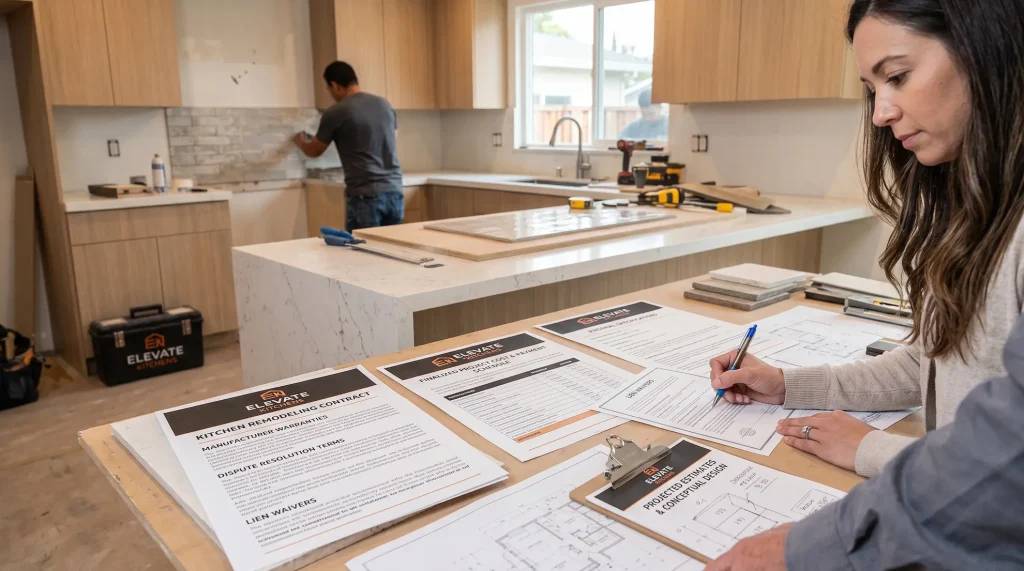
Renovating a kitchen remains one of the most substantial financial and functional investments you will ever make in your residential property. Whether you are reconfiguring a layout for better daily traffic flow, upgrading to custom cabinetry, or installing precision cut quartz countertops, the paperwork governing the job carries as much weight as the craftsmanship executed on site.
Navigating the transition from an initial sales estimate to an enforceable construction contract requires knowing exactly what to look for and where hidden liabilities tend to hide.
Proposal vs. Contract: Spotting the Fundamental Differences
Homeowners often confuse a preliminary proposal with a formal construction agreement. Understanding the boundary between both documents prevents miscommunication regarding design expectations and final pricing.
| Core Attribute | Remodeling Proposal | Remodeling Contract |
|---|---|---|
| Legal Status | Non-binding estimate (Quotation only) | Legally binding agreement enforceable in court |
| Cost Accuracy | Approximate estimate subject to site discoveries | Fixed price or structured cost-plus pricing |
| Level of Detail | General allowances and broad scope highlights | Exact SKUs, dimensioned plans, line items |
| Schedule | Estimated start dates without penalties | Fixed milestone dates and completion targets |
A contractor uses a proposal to pitch services, present preliminary layout ideas, and offer a ballpark figure based on standard square footage. A contract converts those general discussions into rigid project obligations that hold both parties legally accountable.
Essential Structural Components of a Solid Remodeling Agreement
A complete home improvement contract must never rely on verbal assurances or vague handwritten notes. The document should contain clear, itemized sections covering every operational phase of the renovation.
1. Detailed Scope of Work and Demolition Parameters
The scope of work describes every specific physical task the crew will perform inside your home. It needs to define:
- Structural alterations, including the removal of load bearing partitions and the installation of support headers.
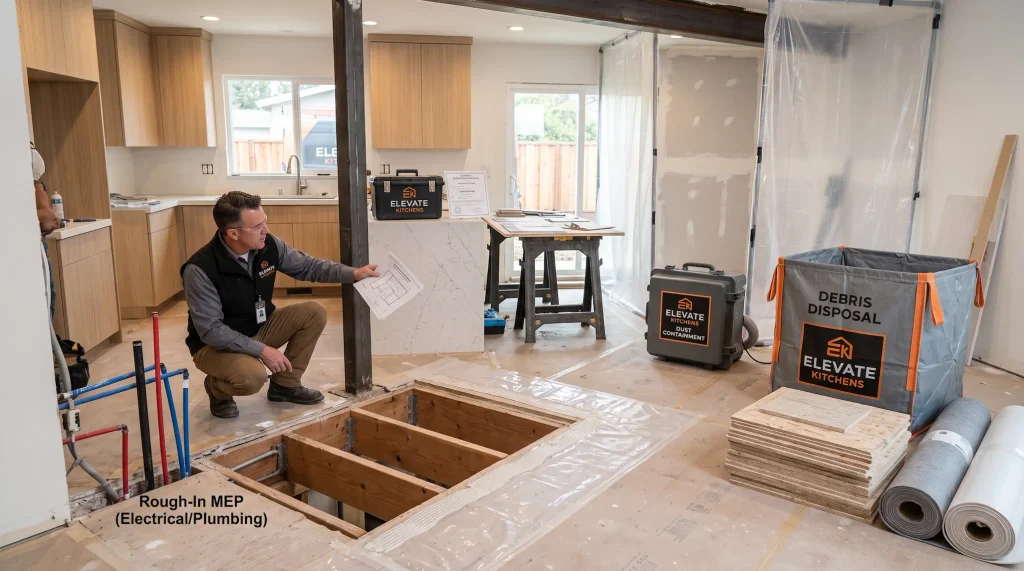
- Mechanical, electrical, and plumbing rough ins that comply with local municipal building codes.
- Subfloor preparation, moisture barrier installations, and drywall finishing levels.
- Specific cleanup procedures, jobsite dust containment measures, and debris disposal via on site dumpsters.
2. Itemized Material Specifications and Fixture Schedules
Avoid ambiguous descriptions such as builder grade cabinetry or homeowner selected tile. Your contract must incorporate an exact specification sheet listing manufacturer brand names, exact product series, model numbers, finish sheens, and physical dimensions. If you selected solid maple face frames with soft close undermount slides, the paperwork must reflect those exact specifications rather than generic alternatives.
3. Clear Milestone Payment Schedules
Never sign an agreement requiring a massive upfront cash deposit. Reliable trade professionals tie payments directly to visible, verifiable project milestones verified through on site inspections:
- Initial Deposit: Typically ten to fifteen percent upon signing to cover design finalization and administrative permitting costs.
- Material Delivery Milestone: Issued only after custom cabinets, tile, or specialized appliances arrive safely on site.
- Rough In Completion: Disbursed after mechanical trades finish wiring, supply lines, and drain stacks, typically following successful municipal rough inspections.
- Substantial Completion: Released when countertops, fixtures, and trim carpentry stand fully operational.
- Final Retainage: A concluding holdback of five to ten percent reserved until all remaining punch list items pass final review.
The Critical Role of Architectural Drawings and Permits
A reliable remodeling contract integrates dimensioned blueprints, electrical schematic diagrams, and structural elevation drawings as official addenda.
- Permit Responsibilities: The agreement must explicitly declare that the general contractor is responsible for submitting architectural plans, obtaining municipal permits, and scheduling required building code inspections. Contractors who pressure homeowners to pull their own permits often lack proper state licensing or adequate commercial liability insurance.
- Zoning and Structural Compliance: Formal inspections by local code officials verify that circuit breakers, dedicated appliance lines, plumbing venting, and mechanical ventilation hoods operate safely within established residential standards.

Managing Jobsite Adjustments: The Formal Change Order Process
Unforeseen structural discoveries frequently happen once existing drywall and cabinetry get stripped away. Outdated knob and tube wiring, historic termite damage, or hidden plumbing leaks behind wall cavities demand prompt corrections.
A professional contract establishes a formal change order protocol:
- Written Authorization: No modifications to the original design or material list proceed without a mutually signed written change order.
- Cost Disclosures: Each document itemizes additional labor charges, material price adjustments, and administrative handling fees.
- Schedule Adjustments: The change order specifies whether the adjustment adds days or weeks to the projected completion milestone.
Disallowing verbal change orders protects both the homeowner and the builder from contentious invoicing arguments at the close of the job.
Protecting Your Investment: Warranties, Liens, and Dispute Terms
Before committing your signature to any residential construction agreement, confirm that standard consumer protection protocols remain fully intact throughout the documentation.
Mechanic’s Lien Waivers
Subcontractors, lumberyards, and specialized trade specialists have the legal right to place a mechanic’s lien against your property if the primary contractor fails to pay them, even if you paid the general contractor in full. Ensure your contract mandates progressive lien releases and final conditional lien waivers accompanying every milestone invoice.
Workmanship and Manufacturer Warranties
Reputable remodelers stand firmly behind their work by providing a comprehensive warranty program:
- Craftsmanship Warranties: A dedicated coverage window, typically one to two full years, covering drywall joint integrity, plumbing connections, cabinet alignment, and tile grout stability.
- Manufacturer Pass Throughs: Transparent handoffs of original factory warranties for solid hardwood components, stone surfaces, and electrical appliances.
Dispute Resolution Mechanisms
A contract should lay out a straightforward path for settling disagreements without immediately resorting to expensive courtroom litigation. Standard clauses specify mediation or binding arbitration managed by reputable arbitration organizations as the preliminary route for resolving contract disagreements.
Final Review Checklist Before Signing
Take sufficient time to analyze every paragraph, addendum, and attached schedule.

- Verify that your contractor’s active state license number, general liability coverage policy, and workers’ compensation credentials appear directly on the agreement header.
- Review allowances to make sure baseline budget lines match real world showroom costs for items like custom backsplashes, designer faucets, and specialty range hoods.
- Confirm that clear daily cleanup expectations, designated worker parking areas, and work hour limitations align comfortably with your family routine.
A detailed, clear contract never signals a lack of trust. Instead, it serves as the clearest indicator of a skilled, professional partner committed to finishing your kitchen remodeling journey on time, on budget, and according to your exact vision.